Genomic Features and Genetic Basis of Tooth Development in Characiformes
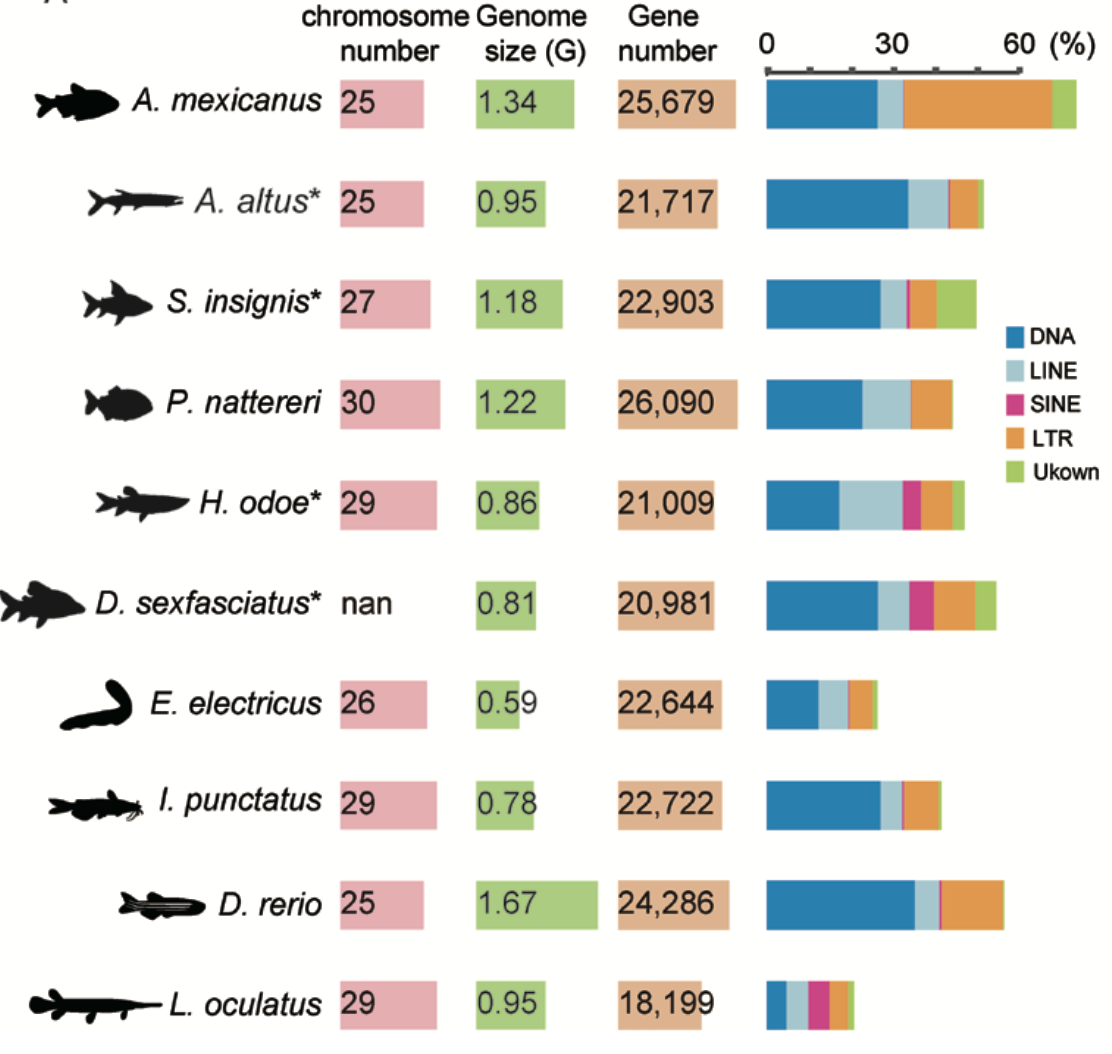
Fish, as the most ancient vertebrates, exhibit many unique characteristics compared to later-evolving vertebrates. Our recent study on Characiformes genomes delves into the genetic underpinnings of tooth development in this diverse order of freshwater fish. This work is part of the larger 10,000 Fish Genomes Project, and provides important insights into the evolutionary biology of fish dentition.
Key Findings
-
Four High-Quality Genome Assemblies:
We sequenced and assembled the genomes of four Characiformes species—Acestrorhynchus altus, Hepsetus odoe, Semaprochilodus insignis, and Distichodus sexfasciatus. Three of these genomes reached chromosome-level assemblies, offering unprecedented opportunities for phylogenetic and genetic analysis. -
Phylogenetic Relationships Within Otophysi:
Utilizing both genome-wide alignments and single-copy genes, we reconstructed the evolutionary relationships among Characiformes and other orders within the Otophysi clade. The findings indicate that Characiformes are paraphyletic, with distinct groups forming separate branches. -
Genomic Basis of Tooth Development:
Characiformes species are known for their well-developed and multicuspid teeth, contrasting with the simpler dentition or absence of jaw teeth seen in Cypriniformes and Siluriformes. Our study revealed key genetic mechanisms behind these differences:- Variations in the copy number of secretory calcium-binding phosphoprotein (SCPP) genes were identified, suggesting their critical role in tooth morphogenesis and mineralization.
- Specific genes such as KREMEN and ITGAV/CD51, which are associated with tooth differentiation, were notably absent in Semaprochilodus insignis, aligning with its smaller oral teeth morphology.
These findings enhance our understanding of fish tooth development and contribute to the broader knowledge of vertebrate dentition.
Reflections
Fish genome research is a major focus at the BGI-Qingdao Research Institute, where many XinLab members actively contribute to projects such as the 10,000 Fish Genomes Project. This study, which examines the genetic basis of tooth development in Characiformes, was primarily led by my doctoral student, Xianwei Yang, as part of his PhD graduation research project.
Xianwei approached this project with remarkable dedication and thoroughness. He was responsible for much of the genome analysis and bioinformatics work, ensuring that the study progressed smoothly and ultimately resulted in successful publication. As a mentor, it has been incredibly rewarding to see his hard work and diligence contribute to advancing knowledge in this fascinating field of evolutionary biology.
Conclusion
This study highlights the importance of Characiformes genomes in resolving evolutionary questions within Otophysi and elucidating the genetic basis of tooth development. It also demonstrates how genome sequencing and comparative analysis can uncover the mechanisms of adaptation and diversity in fish traits. We look forward to extending this research to further explore the genetic pathways and molecular functions involved in tooth ontogenesis across diverse fish species.